
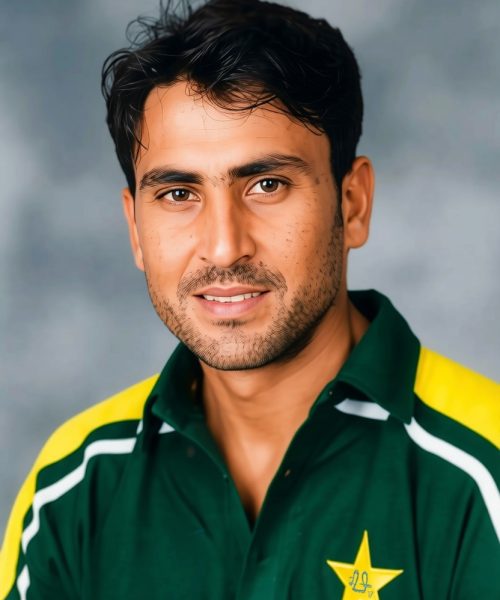
In Pakistan, cricketers are often remembered for their statistics. Centuries, wickets, victories — cold numbers etched into record books, admired from a distance.
But Younus Khan?
He is not merely remembered. He is felt.
His legacy does not live in scorecards alone. It lives in the dusty cricket grounds of Mardan, where young boys now believe that greatness does not require a Lahore address. It lives in the dressing rooms of the national team, where his name is still invoked when a young batsman needs to learn patience. It lives in the homes of millions of Pakistanis who, for 17 years, woke up to the quiet reassurance that Younis was at the crease — and therefore, all was not lost.
This is not the legacy of a run-scorer.
This is the legacy of a man who became Pakistan's conscience-keeper.
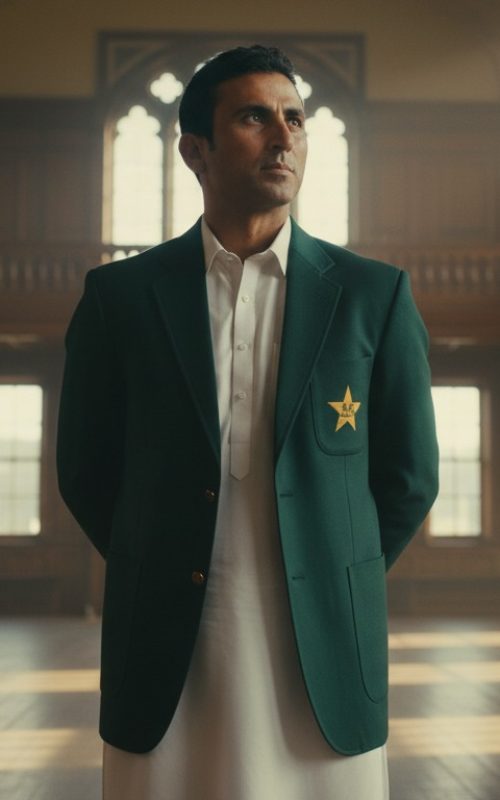
March 3, 2009.
Lahore.
Twelve gunmen. Six hours of terror. Eight Pakistani policemen martyred. The Sri Lankan cricket team ambushed, wounded, traumatized.
In the aftermath, international cricket fled Pakistan. The nation was isolated, grieving, ashamed. The sport that defined its identity had been snatched away. For nearly a decade, Pakistan would play every "home" match in empty stadiums across the UAE — a wandering team without a home, carrying the weight of a country that watched from thousands of miles away, desperate for belonging.
Enter Younus Khan.
Seven months after the bullets stopped firing, Younus walked onto the field at Lord's as captain of Pakistan — a team broken in spirit, written off by the world. The 2009 ICC World Twenty20 was not meant to be theirs. They were too volatile, too inexperienced, too scarred.
But Younus did something that does not appear in any statistic.
He healed them.
He did not lecture. He did not scream. He simply stood beside his players — not above them — and told them they were enough. He handed the ball to his bowlers with unshakeable trust. He absorbed pressure so his teammates could breathe. When Pakistan lifted the trophy at the Home of Cricket, it was not a victory. It was a resurrection.
That is Younus Khan's legacy
.
He did not just win a World Cup. He gave a grieving nation permission to smile again.
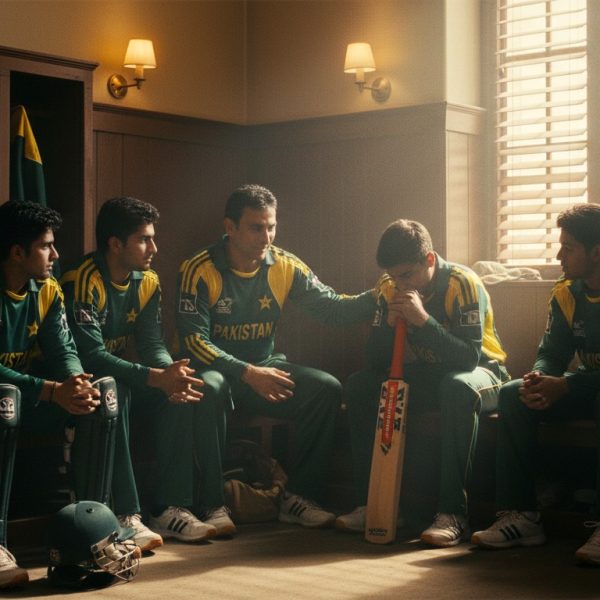
Ask any cricketer who played under Younus Khan what they remember most. They will not speak of his cover drive. They will speak of his phone calls.
When Azhar Ali lost his father, Younus was the first to call. When Asad Shafiq struggled with form, Younus sat with him for hours — not discussing technique, but life. When a young Babar Azam entered the dressing room, nervous and unsure, Younus placed a hand on his shoulder and told him he belonged.
He was not just a senior player. He was an elder brother. A mentor. A father figure to boys who were far from home, carrying the hopes of 220 million people on untested shoulders.
Younus Khan understood something profound: Cricket does not build character. It reveals it.
And under his watch, a generation of Pakistani cricketers learned that true greatness is not measured in runs, but in how you treat the man standing beside you.
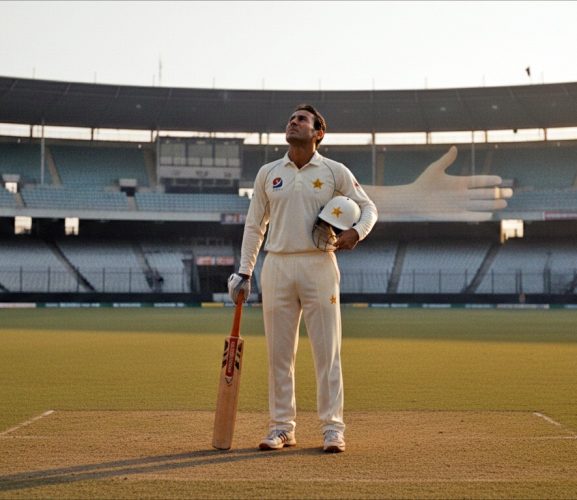
Behind every cover drive, every defiant century, every calm walk to the crease — there was a man carrying unspeakable weight.
Younus Khan lost his elder brother, Mushtaq Ahmed, in 2011. His brother was not just family; he was his foundation, his first coach, his loudest cheerleader. When Mushtaq passed, a part of Younus went with him. Yet, days later, he was back at the crease — not because cricket was easy, but because grief made him understand that duty does not pause for pain.
Earlier, in 2003, he lost two younger brothers in a car accident. He buried them and returned to the field. No public mourning. No dramatic farewell. Just silence, and runs, and an unspoken understanding that some battles are fought far beyond the boundary rope.
Younus Khan did not merely overcome adversity.
He metabolized it. He turned grief into grace, loss into legacy.
And in doing so, he taught an entire generation that resilience is not the absence of sorrow — it is the courage to continue despite it.
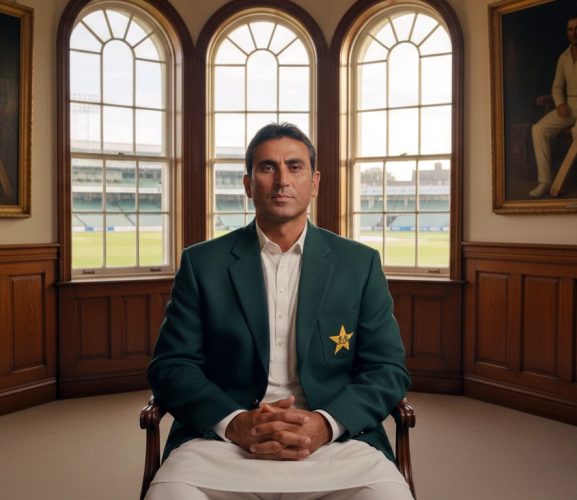
In an era of scandal, leaks, and fractured dressing rooms, Younus Khan's career stands as an anomaly.
Seventeen years. Zero controversies.
Not one accusation. Not one whisper of wrongdoing. No captaincy conspiracies, no public spats, no monetary disputes aired in the press. In a cricket ecosystem often defined by chaos, Younus was the eye of the storm — utterly still, utterly untouchable.
This was not coincidence. This was discipline.
Younis understood that his name was not his alone. It belonged to his family, his city, his country. He guarded it with the same vigilance he guarded his wicket — fiercely, patiently, without compromise.
Today, in an age where brand safety is a corporation's highest concern, Younus Khan represents something increasingly rare:
A public figure beyond reproach.
He is not merely marketable. He is
sacred.